The Lab Notebook: From Spark to Ship
Our methodology is a documented, evidence-based cycle. We don't guess what's fun—we prove it, prototype it, and polish it until it sings. This isn't a marketing claim; it's our lab notebook, open for inspection.
1. The 'Why' Memo
Before a line of code is written, we define the single, irreducible core. Is it a visceral sensation? A cognitive puzzle? A social loop? This one-page manifesto is our North Star, refusing to let scope creep dilute the hook.
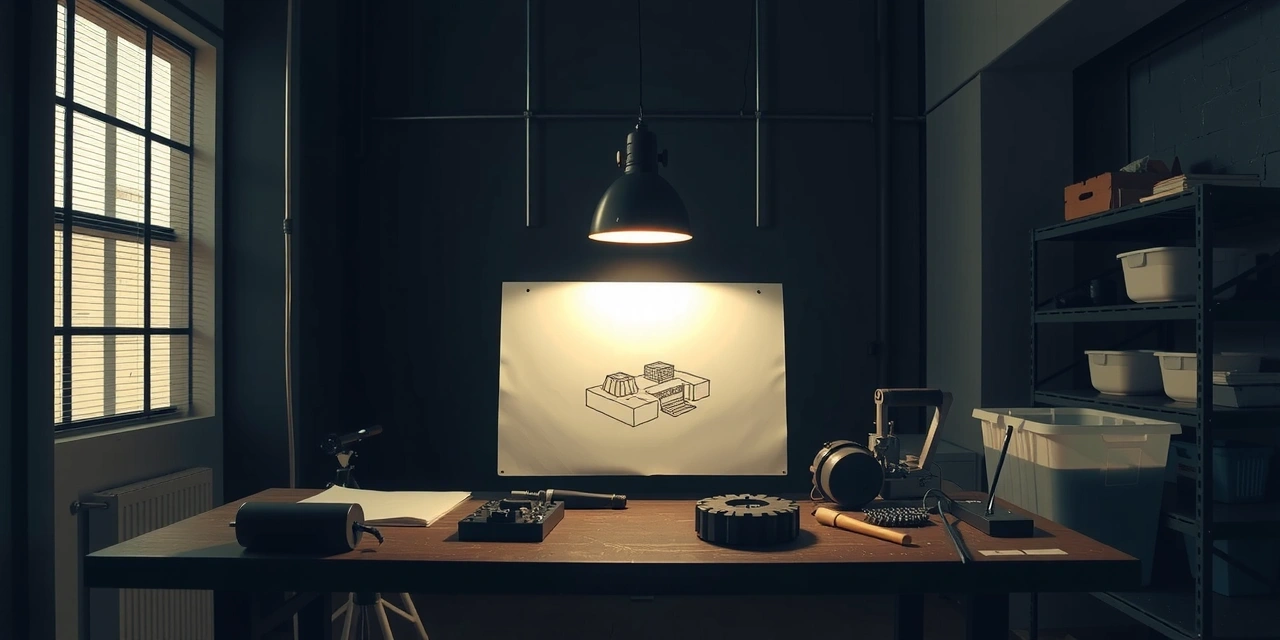
2. The Paper Prototype
We test the core loop with cards, dice, and paper cutouts. This strips away digital noise, forcing us to validate the mechanic in its purest form. If it's not fun with physical objects, it won't be fun with pixels.
3. The 'Greybox' Sprint
A dedicated 2-week sprint with zero final art. Using programmer art and placeholder audio, we prove the mechanical integrity. This is where we answer the brutal question: Is the loop fun without the sugar of aesthetics?
4. The Playtest Log
Every test is documented publicly. We timestamp moments of confusion, delight, or rage. Player quotes are logged verbatim next to our designed response. This isn't a summary; it's a raw data feed.
5. The Polish Pass
A dedicated audit phase focused on 'micro-frustrations.' Input lag, unclear UI states, suboptimal audio cues. We don't add content here; we sand down rough edges until the experience feels invisible.
6. The Launch Post-Mortem
An internal, candid document analyzing what we learned, what broke, and what we'd do differently. It's shared with the entire team to close the loop and seed the next project.
Artifact: The 'Why' Memo

A physical, laminated card that must be kept in the project folder. It is referenced at every major decision point.
Constraint: The 2-Week Rule
The Greybox sprint is time-boxed. This forces focus on the core mechanic, preventing endless iteration. If it's not compelling in 10 working days, the premise needs re-evaluation.
Beyond the Survey
We don't ask players if they had 'fun.' We observe what they do, why they do it, and where they stumble. Our framework is built on three distinct pillars, each designed to capture a different layer of the player experience.
The Silent Observer
A researcher watches a player without instruction, noting moments of hesitation or delight in a timestamped log. We map these to specific UI elements or mechanics.
The Mechanics Interview
A post-session deep dive. We ask 'why' behind every decision, uncovering latent player goals and motivations that raw observation can't capture.
The A/B Funnel
Testing two versions of a single mechanic with metrics on completion rate and retry frequency. We move from 'we think' to 'we measured'.
Protocol & Pitfalls
Constraint: The Question
We never ask 'Is this fun?' We ask 'What did you try to do, and what happened instead?' This reframing yields actionable data, not subjective opinions.
Pitfall: Friend Bias
Our test pool is curated from our target audience, not our personal networks. Friends are too polite. We need honest, unfiltered failure.
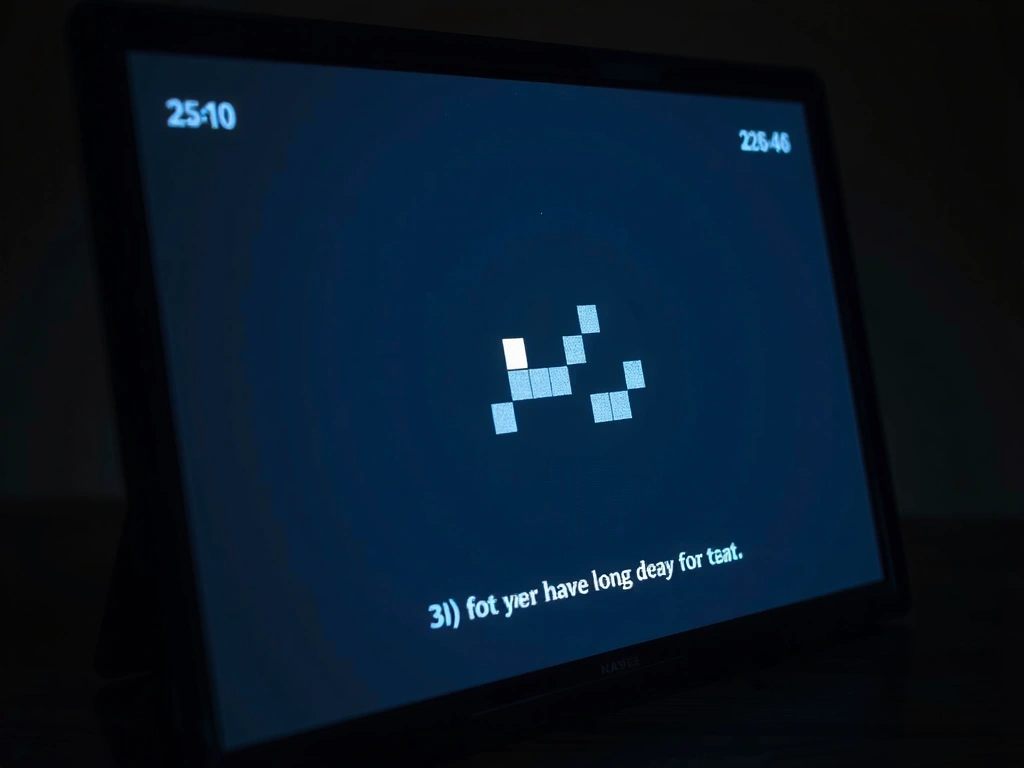
If the game isn't fun with programmer art, it will never be fun with final art.
The Greybox is our most sacred phase. It is the crucible where we strip away all aesthetic layers—color, animation, sound design—to test the raw mechanical skeleton. We embrace the 'ugly.' A beautiful game with broken mechanics is a failure. A grey, blocky game that feels incredible is a promise.
The Rule of Three: Every core mechanic must be prototyped in three different input schemes (e.g., tap, swipe, hold) before we commit to one.
The One-Button Test: Can the core loop be initiated with a single input? This exposes the purity and accessibility of the design.
Aesthetic Sacrifice: We build a 'fun budget.' Art and sound are added only after the Greybox hits an 80% 'fun threshold' in playtests.
The First 60 Seconds
We consider onboarding the most critical moment in a player's journey. Our goal is zero-instruction comprehension. If they're lost, we've failed.
The 'Zero-Instruction' Goal
We design the first minute so a player can understand the core loop without a single tutorial text box. Visual language and feedback are everything.
Metric: Time to First 'Aha!'The 'Three-Tap' Rule
A player should perform the primary action within three taps/swipes from the title screen. This sets a hard constraint on interface complexity.
Principle: Friction BudgetSensory Cue Mapping
Every core action gets a unique sound and haptic pattern. We build muscle memory before cognitive understanding.
The 'Fail-Safe' Mechanism
If the player fails the first challenge, we provide an immediate, non-punitive hint—not a 'Game Over' screen. The goal is to guide, not gate.
Ready to build with a proven process?
Our methodology is designed for clarity and results. Let's discuss how we can apply it to your project.
Start a Project